
When I am digging in the garden, I like to feel the
soil. It has been an ongoing process to turn our Tennessee chirt
and dirt into soil in our garden.
How? We add lots of compost every time we dig in the beds and top-dress all our
plants every spring. It's a joint effort; my husband brings the compost in 5-gallon
buckets from the compost bin behind the shed (I can't lift anything that heavy)
and I use my bare hands to mix it with the dirt or spread around the base of
plants. I just like the way it feels!
One can make one's own or buy ready-made at a garden center or box store. Of
course, making one's own is less expensive and also helps the environment by
recycling anything from papers to kitchen scraps, thus reducing the load on our
landfills.
How to get started
Compost is something every gardener can do, even if you don't
have a yard with room for a large compost bin. You do not need a container, a
pile will work nicely. Many people, however, prefer some sort of enclosure
to keep the space looking neat.
Containers can be simple or fancy. Make them from materials such as old pallets,
lumber, mesh fencing, or cinder blocks, about 3x3x3 feet is ideal in size. You
can even buy composting bins, the choices range from simple plastic structures
to fancy barrels with a turning handle.
We have found that a 3-pile system works best for us, one pile for the
iniitial hot composting, the center one for the curing and the third
to store the ready-to-use compost.
What to put in your compost
Throw in
grass clippings, your spent annuals, trimmings from your shrubs, the tops of
perennnials that are done for the season, dead leaves, shredded
newspaper (and junk mail if you're so inclined), coffee grounds,
egg shells, tea bags, kitchen waste such as vegetable and fruit
peels, lint and hair from your dryer, cow, horse and sheep manure and just about anything that's
biodegradable.
What NOT to put in your compost
- Invasive weed plants and seeds including morning glories, four o'clocks,and
comfrey roots--unless you want
them sprouting all over the yard and choking out your other plants.
- Diseased plants. This may seem like
an obvious one, but it's easy to
overlook.
- Pet "manure", a.k.a. feces
from dogs and cats (and litter from
the
litter box).
- Animal products (including dairy
products like cheese) of any kind such
as
meat, grease, and bones also have no place in the compost
bin. Not only will they smell bad, as they
decompose this type of waste will attract vermin.
I have a pile - now what?
Use a pitchfork to turn the pile every so often (the more frequent you turn,
the faster the decomposition). Add water if the pile is dry looking. Turning
gets air into the center of the pile and speeds the biological decay. Turning
also mixes material from the outside of the pile into the hot center.
The pile will shrink to about half its original volume during the hot phase (a
couple of weeks to a month). The pile then needs to sit another for 4 to 8 weeks
to cure.
The compost is ready to use when at least 8 weeks have passed since initial mixing,
the pile no longer heats when turned, and the material looks dark and crumbly.
Using your compost
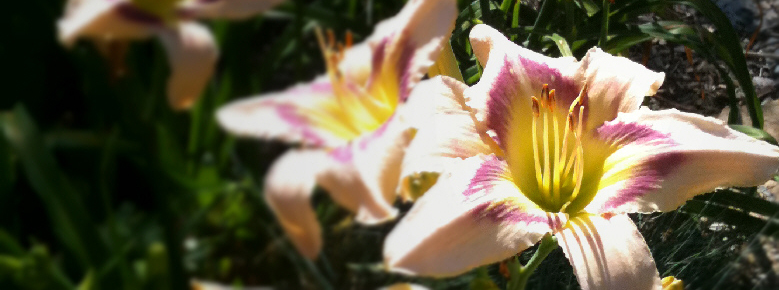
Generously mix it with the dirt whenever you are digging in your beds. Not digging? Spread it generously like mulch around the base of your plants (be sure not to cover crowns of such plants as daylilies.
You may be tempted to use compost as a soil conditioner before
it is ready. If the organic materials have not completely decomposed,
plants growing in the amended soil may turn yellow and appear
stressed. This is the result of the decomposition process continuing
near plant roots and soil micro-organisms compete with plants for
nitrogen. Add some high nitrogen fertilizer and your plants will
perk up--remember to wait for your compost to be rich, dark brown
in color, crumbly, and soil-like next time.
|