
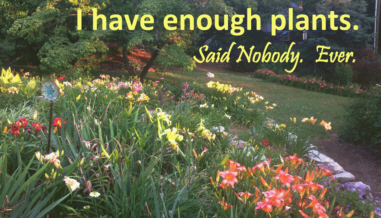
Finally, there's a little relief from these scorching days of summer we have experienced. Even the weeds in our garden are looking dry and heat-stressed. Join me for a break with a glass of lemonade or ice tea on the porch.
Fall planting time is here. Now, before the leaves fall, is a good time to take stock and plan for next year. Let's put down the refreshments and take a look around. Are there: Empty spots? Plants which did not live? Candidates for the compost? Plants that need dividing or moving? Annuals that are 'done'?
Fall planting comprises more than putting some mums out by the drive/
front door and planting spring bulbs.
Why
You planted perennials because you wanted to reduce the amount of time
spend digging and increase the time admiring the garden. Perennials,
while low-maintenance, still need dividing. Divide them now before they
go dormant, they are much easier to hack into pieces, oops, i mean
carefully dig up and separate. Use the division to fill empty spots!
Divisions and new acquisitions planted in the fall will have
time to establish their roots and are much more likely to reward
you with generous growth and blooms next year. Additionally, these
fall transplants will be much more heat tolerant and drought resistant
next summer, saving you from frequently lugging the hose or watering
can during the heat of next summer.
Fall planting frees up valuable and/or limited greenhouse/basement/indoor
space for those plants that really need it. There will finally be
room to bring in your priced brugmansia or start all those heirloom
tomato seeds that you have been saving.
When
As soon as temperatures get into the 70's in your area, get
started. I often start digging up and dividing as early as late august
after the first good rain.
Try to finish your planting no later than approximately 6 weeks
before your first frost. At least that's what the garden books
and journals recommend. There's no reason to panic if you don't
get finished 'in time'. Most plants are very forgiving and will
tolerate being moved or divided as late as 3 weeks before your
first frost date.
What
I usually start the dividing and moving process with my 'special plants'.
These are the ones I would hate to loose. So I want them to have
plenty of time to get settled in before it gets cold.
While I am moving and digging, I drop spring flowering bulbs into the planting
holes. This serves three purposes: more spring flower power, instant
and labor free coverage for the ugly bulb foliage in early summer
and location marking while the perennials are dormant. If you have
ever dug up your dormant perennials while finding a home for a
new plant in early spring - then you know what I am talking about!
Seeds and seedlings go out in the fall in our garden. Many perennials and
some biannuals need to vernalize (have a dormant period) before
they will flower. Some seeds require a chill period before they
will sprout. So out it all goes!
Last but not least, the brugmansia come in. Depending on your gardening
zone, our brugmansia may be your cannas, ferns, dahlias or other
non-hardy selections. We dig up our favorites, place them in large
pots and move them to the greenhouse. We also take cuttings of
those that we leave outside - just in case the winter is unseasonably
cold. Before bringing your outside plants in - inspect them for
pests and treat if needed.
|